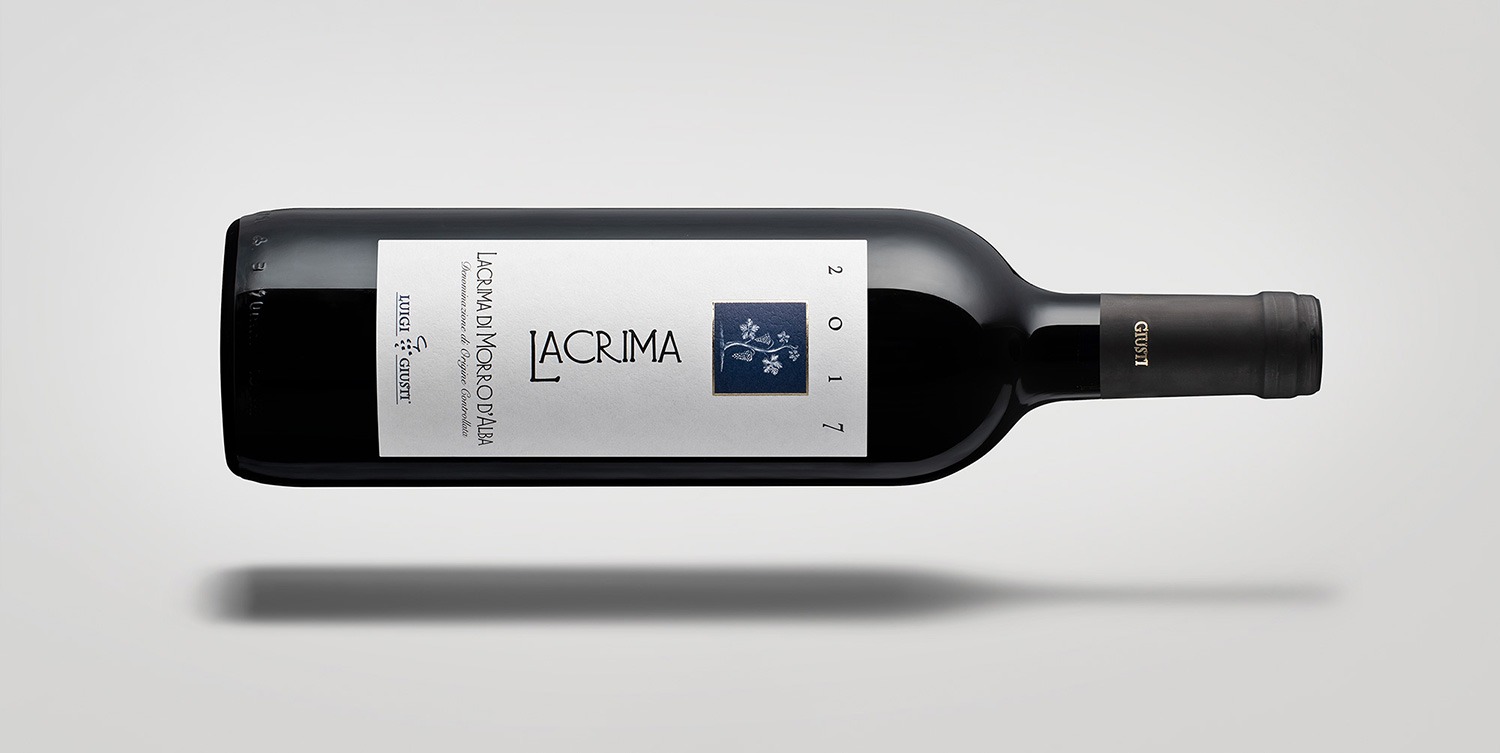
In the global market, your wine bottle photography is your primary digital storefront.
Wineries invest heavily in custom glass, textured paper, and premium foil stamping to define their brand identity. To captivate international buyers, distributors, and consumers, your digital assets must reflect that same luxury. Professional commercial bottle shots are the most critical investment for your website, catalogs, advertising campaigns, and e-commerce platforms.
Inside the studio: our wine photography process
A high-end bottle shot is not just a single photograph, it is an intricate technical build. A standard wine bottle combines four elements with completely different reflective surfaces:
- The liquid (translucency and color depth)
- The glass (specular highlights and reflections)
- The label (paper texture, embossing, and metallic foils)
- The capsule or cork (matte or glossy finishes)
To capture each texture with absolute color accuracy, we utilize a multi-exposure lighting technique. We illuminate and shoot each element independently under precise studio conditions.
Advanced compositing and High-End Retouching
These individual, optimized exposures are then seamlessly blended during our digital post-production phase. Using advanced commercial compositing, we eliminate unwanted studio reflections, correct geometric distortions, and enhance every tactile detail.
The result? Flawless, high-resolution hero images and packshots tailored for global advertising, lookbooks, and high-converting online stores.
Step 1: Capturing the liquid and translucency
When photographing a bottle with a translucent or semi-transparent liquid (such as white wine, rosé, or spirits), showcasing the inner glow and true color of the product is essential.
By positioning a precise light source directly behind the bottle (backlighting) combined with a targeted lateral angle, we create a beautiful gradient transition. This high-end studio lighting technique enhances the natural color vibrancy of the liquid while dramatically increasing the depth, shape, and three-dimensional form of the bottle.
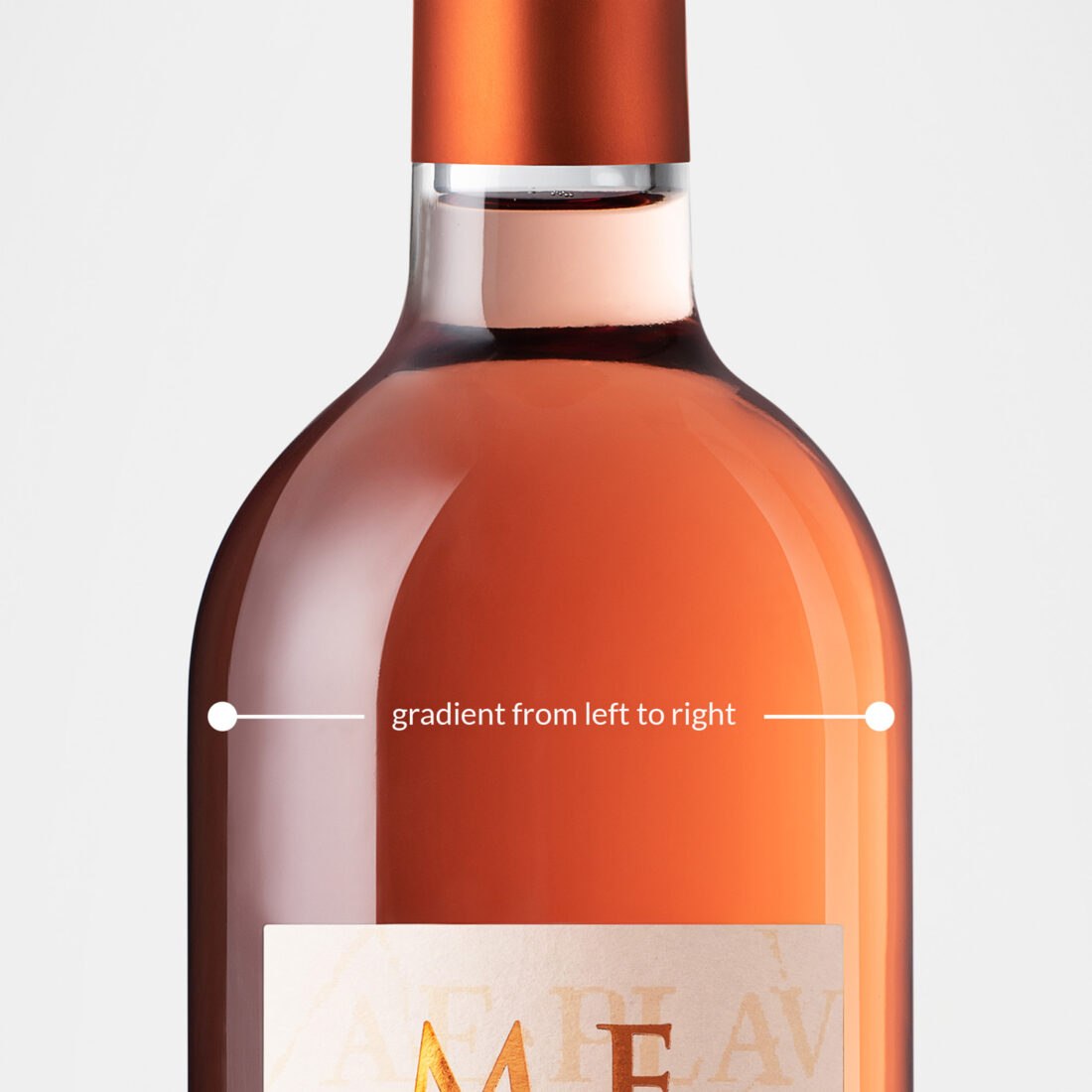
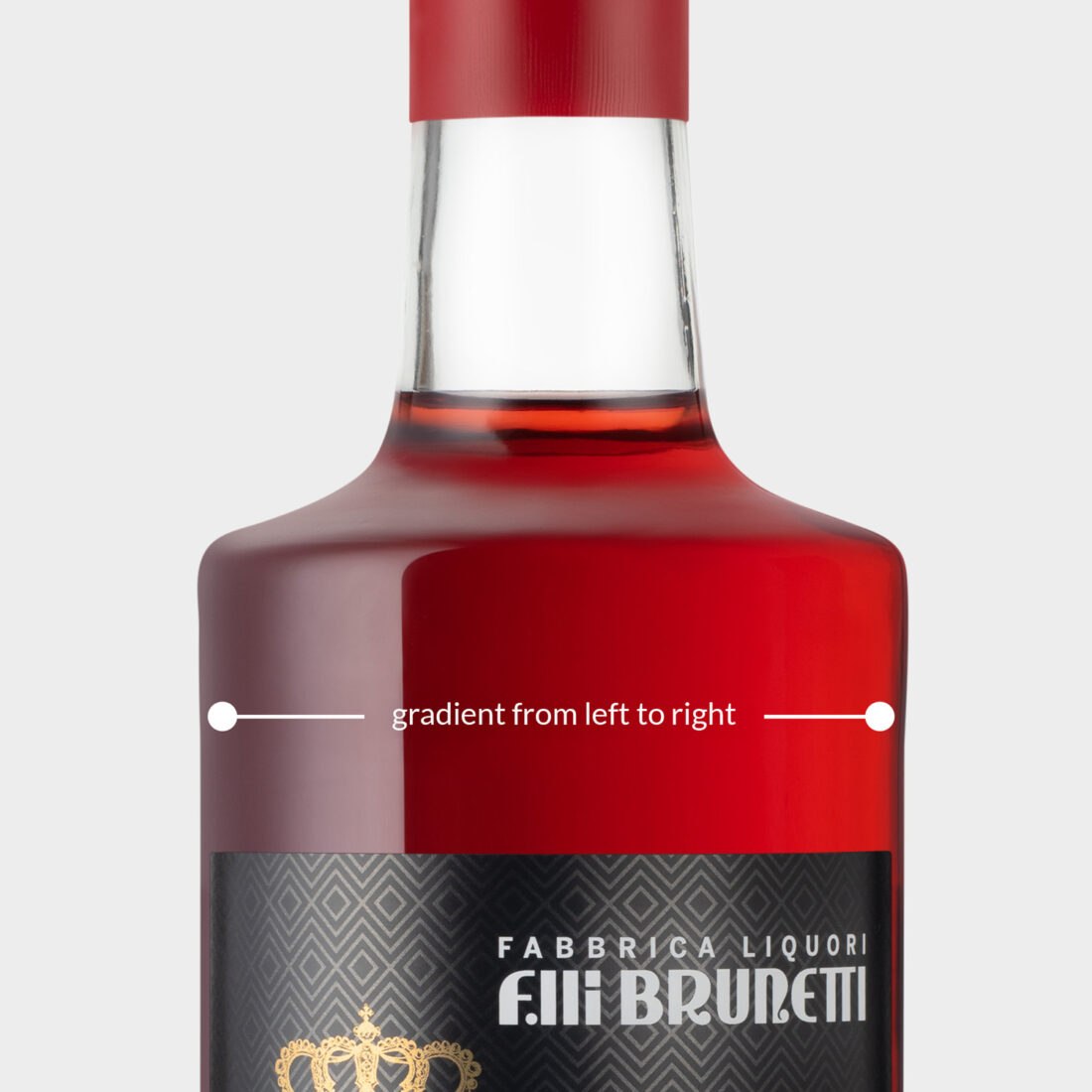
While this specific lighting setup perfectly illuminates the bottle’s liquid contents, it is not suitable for the other components. Elements like the label and the capsule require entirely different light diffusion and must be photographed separately by altering the studio setup.
This initial shot serves as our base layer, meticulously calibrated solely to capture the perfect transparency, color, and glow of the liquid.
Step 2: Mastering glass reflections and highlights
Due to its physical properties, the glass profile of a bottle is undoubtedly the most challenging element to control in studio photography.
Using a highly controlled lighting setup, we create clean, continuous specular highlights along the entire length of the bottle. This precise execution accentuates the sleek, reflective surface, injects high-end brilliance, and delivers a visually harmonious look.
To achieve these flawless vertical highlights, we build upon the initial backlight by introducing one or more soft light sources positioned frontally and laterally to the bottle.
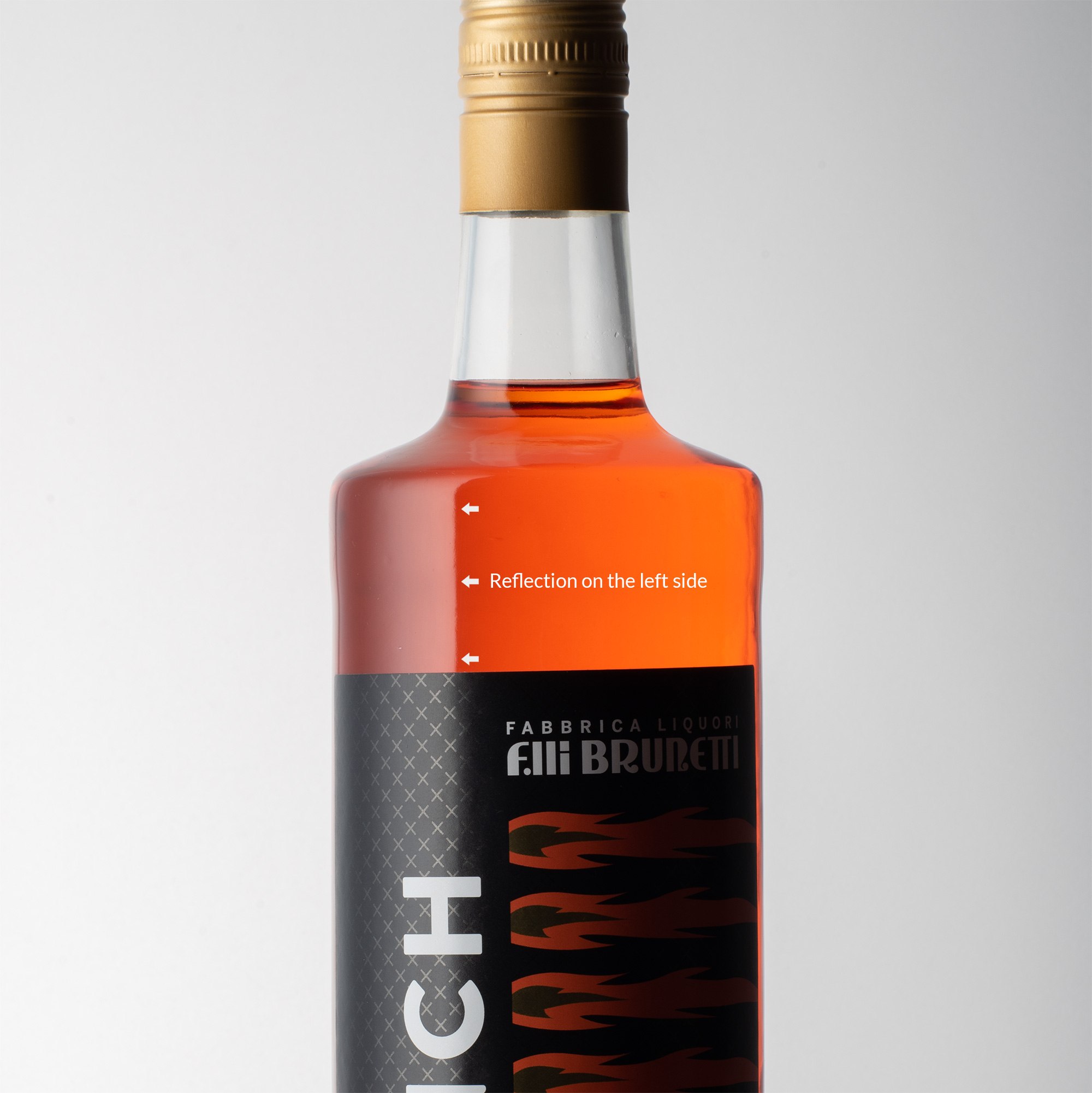
Depending on the creative brief, we can shape various types of reflections. Whether a single-sided highlight or symmetrical dual-sided catchlights, featuring either sharp, defined edges or a soft, feathered gradient.
The optimal choice is always evaluated on a case-by-case basis, tailored specifically to the physical contours of the bottle and the composition of the selected background.
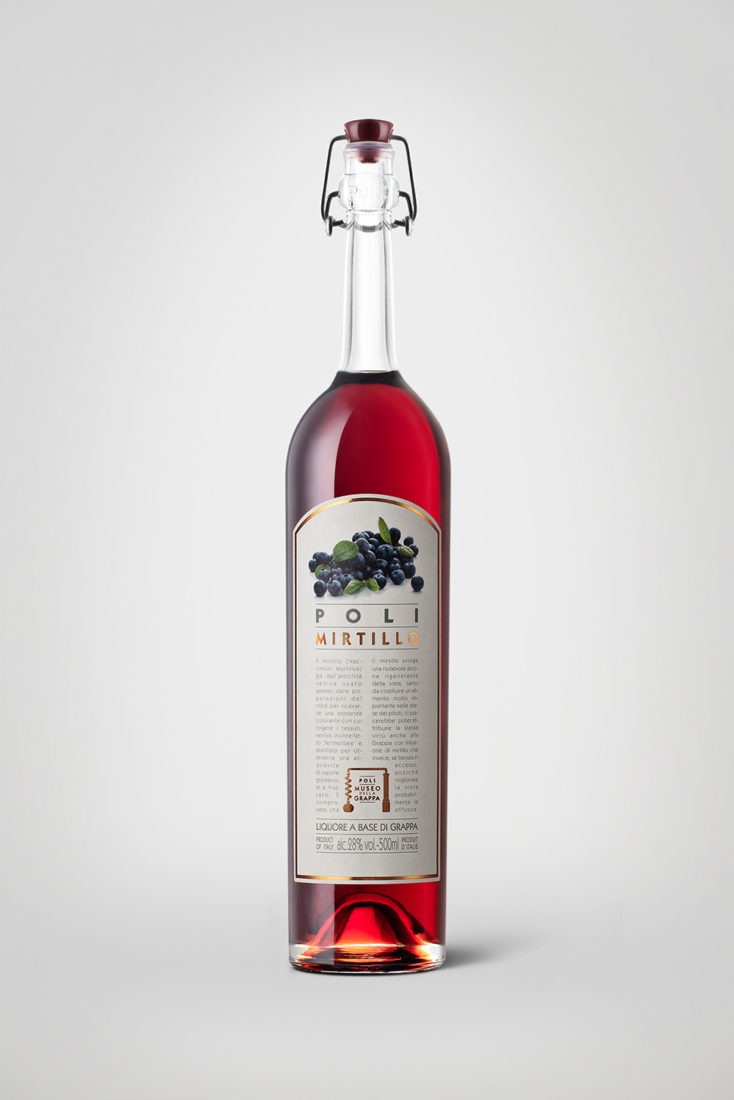
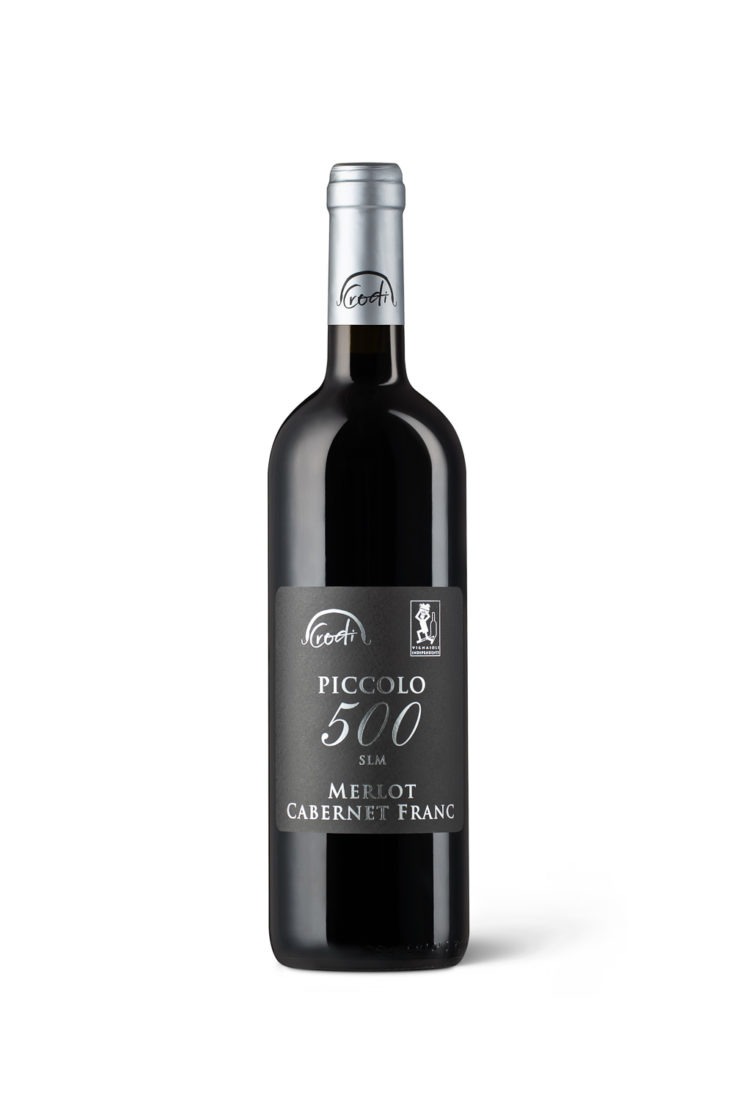
Step 3: Showcasing the label and luxury print finishes
The label is the core identity of the bottle; the winery’s branding, logos, and typography must always be perfectly legible, and the paper stock instantly recognizable.
To achieve this, we design a dedicated lighting setup for the label that creates a soft gradient, enhancing its three-dimensional texture and depth.
Furthermore, meticulous attention is paid to capturing high-end print embellishments, ensuring that premium finishes like gold foil stamping, embossing, and spot varnishes are brilliantly highlighted and true to life.


Step 4: Capturing the capsule, cork, and band alignment
The final component to photograph is the capsule, neck sleeve, or cork. It is highly frequent to capture this element in a dedicated exposure, as printed logos or brand marks on the capsule are often not perfectly aligned with the main front label during the bottling process.
For this shot, we implement a tailored lighting setup that ensures absolute visual consistency with the light, shadows, and reflections already established on the glass and label.


The finishing touch: ground shadows and reflections
At this stage, we address the final, optional element that grounds the bottle: adding a realistic drop shadow or a specular reflection onto the surface.
The studio lighting setups used to sculpt the individual components of the bottle are not suited for generating a natural shadow. Therefore, we capture an additional, dedicated exposure with a specific light modifier to achieve a visually pleasing ground shadow with the perfect gradient and depth.
Alternatively, if the creative direction calls for a high-end mirror reflection, the bottle is placed on a premium reflective surface, such as a glossy white or black plexiglass sheet, during the shooting process.


The Post-Production stage: advanced digital compositing
Once we have captured all the individual exposures of each component under their perfect lighting conditions, we move into the digital post-production and compositing phase.
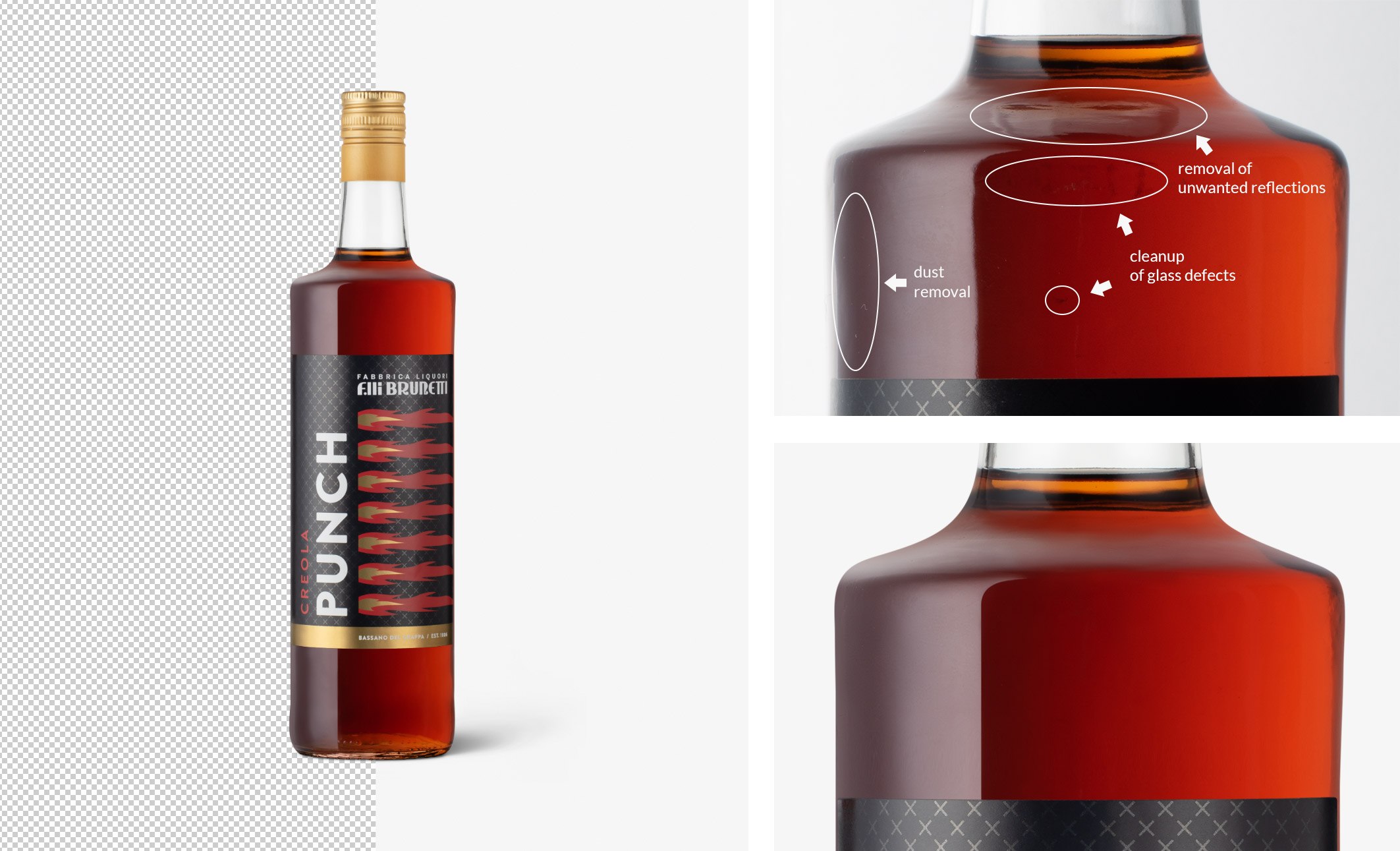
First, we import the optimized layers for the label and capsule into our base exposure. Next, we generate a high-precision clipping path (masking) to isolate the bottle. This allows us to place the product onto a pure white background or deliver a transparent alpha channel, providing a highly versatile master file perfectly suited for graphic design, web development, and layout integration.
Following this, we perform meticulous high-end retouching to clean all surfaces. This includes removing dust, correcting glass imperfections, and eliminating any micro-impurities within the liquid. Finally, the ground shadow or mirror reflection is placed on a separate, dedicated layer, giving you the absolute flexibility to enable or disable it depending on your media requirement.
Achieving a professional, high-end commercial result in wine bottle photography requires a seamless blend of experience, technical lighting mastery, and advanced post-production skills. Ready to elevate your product imagery? Partner with a professional commercial studio to showcase your wine at its absolute best. Get in touch today via our contact form to request a tailored proposal.