Successful advertising and commercial communication thrive on the relationships between different creative professionals: graphic designers, copywriters, web designers, and still-life photographers.
The final asset is always the result of a collective effort, where each specialist brings their unique expertise and perspective to the table. This collaborative solution is then presented to the client, who naturally knows their market, audience, and brand positioning better than anyone else.
In this article, we walk you through the creative and strategic process behind one of our recent projects: a commercial photoshoot that perfectly combines e-commerce still-life with high-end food photography.
The project: e-commerce still-life photography for an artisanal bakery
In early April, a phone call from a graphic designer friend of ours opened the door to a unique project: a request for a quote for an e-commerce platform specializing in artisanal pastries, specifically tarts and cookies.
The bakery laboratory had just inaugurated its new facility and was starting production in March 2020, right in the middle of the suspension and uncertainty of the Italian Covid-19 lockdown.
Yet, fueled by courage, determination, and immense enthusiasm, two women decided to launch their business anyway. It was an adventure they had planned and prepared for over a year. The only missing pieces were the commercial photographs!
The style: lighting and set design
During our initial kickoff meeting, it became immediately clear that the bakers had a very precise vision. They came to the table with two illustrated books to show us exactly how they wanted their products to look: dark wood or textured dark backgrounds, soft chiaroscuro lighting, and minimal, clean props.
This is where our expertise comes in: translating these creative inspirations to fit the actual products we had to photograph, which had very different physical characteristics from the references in the books.
We began crafting the set, testing different setups: should we use studio flash with softboxes, reflector panels, or a strategic combination of both? At the start of any new project, there is always a phase of experimentation where we test various lighting configurations. Once we achieved a setup we were truly happy with, we sent a preview to the client. They loved it! Framing and lighting setup approved. We were ready to proceed with the entire product range.
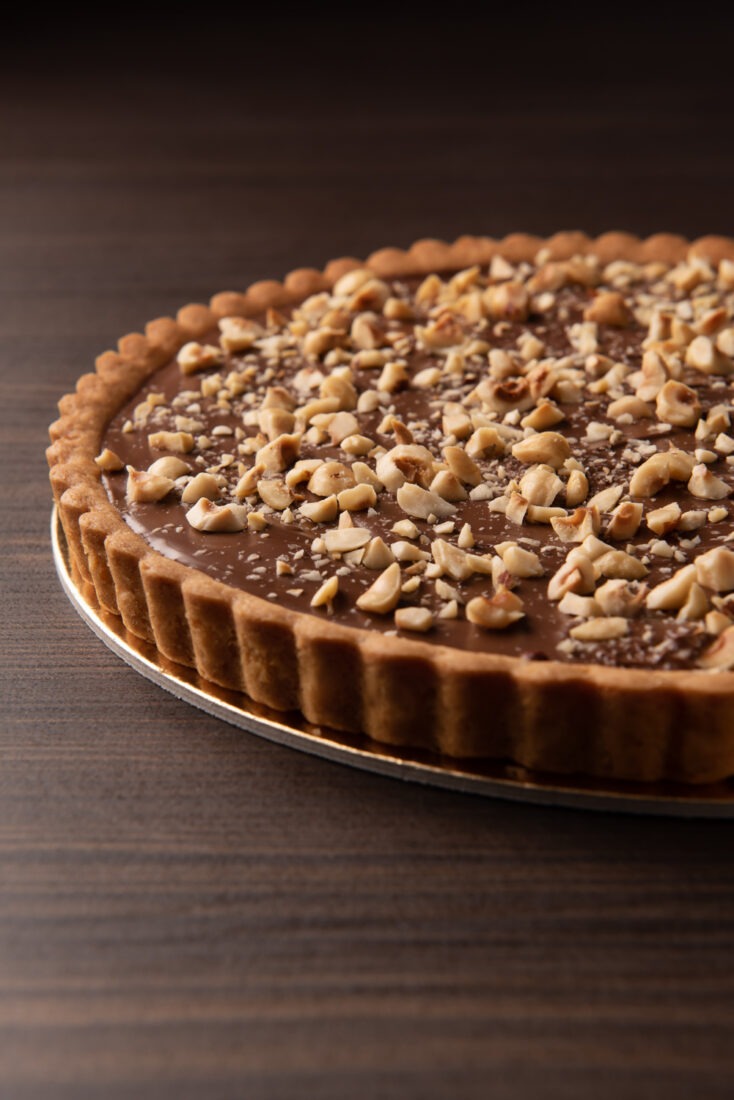
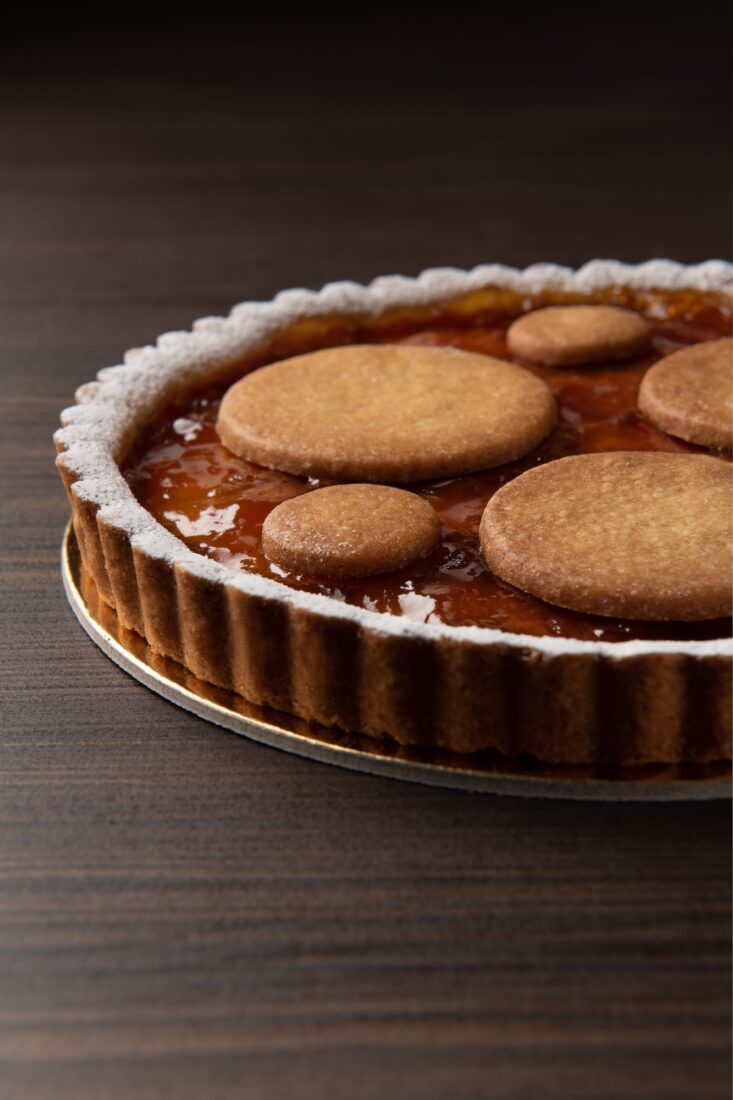
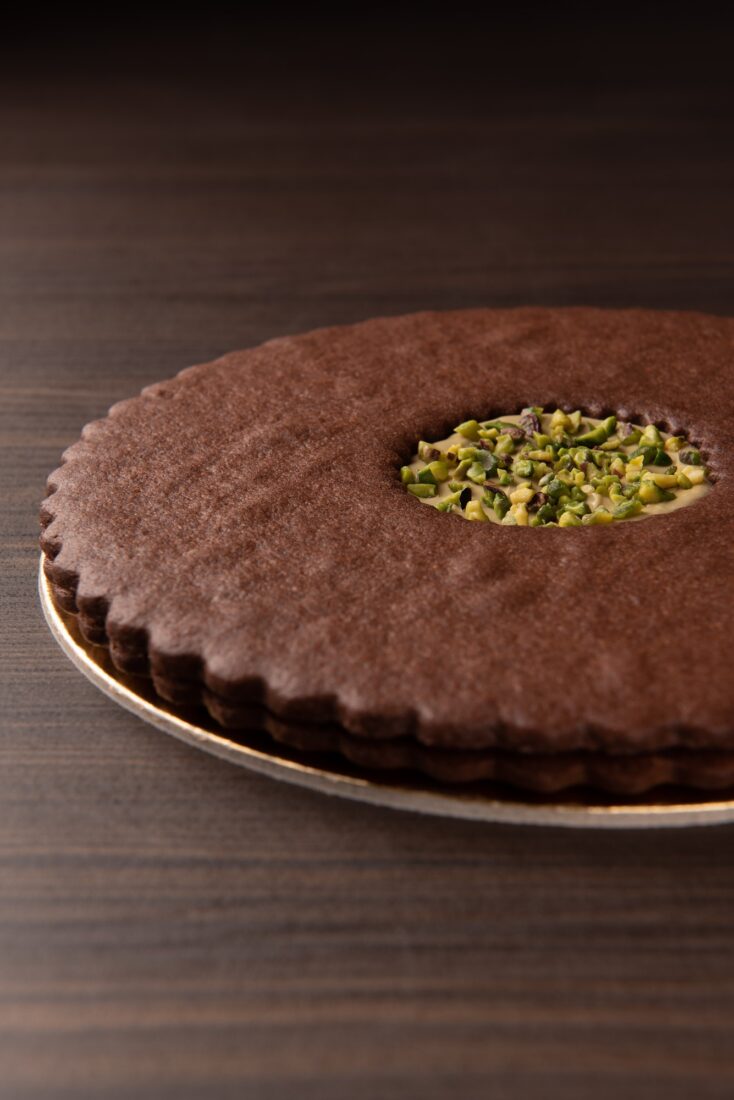
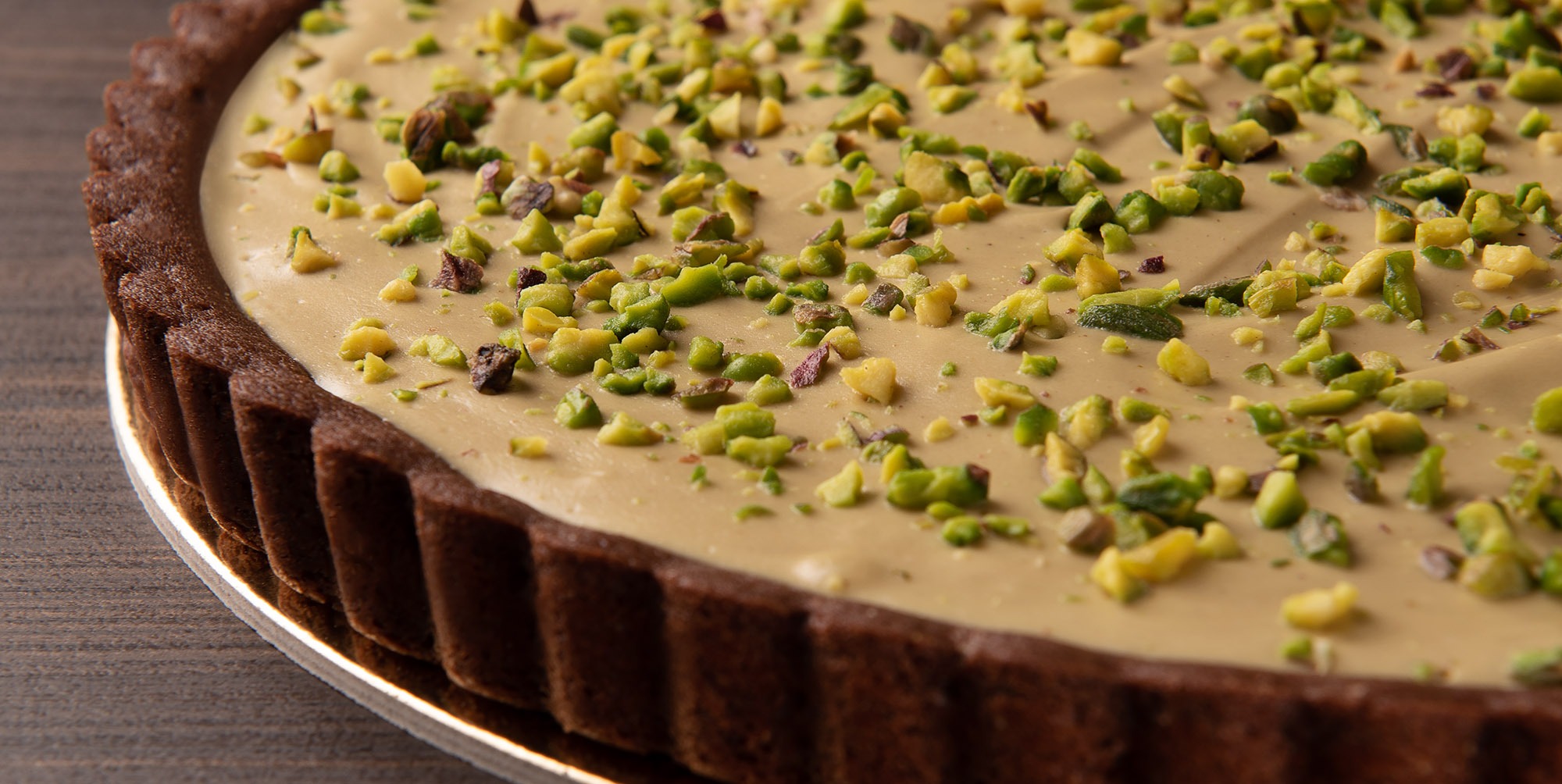
The tarts came in several varieties, featuring either matte fillings like pistachio or hazelnut creams, or glossy jams that needed to look brilliant and rich with highlights in the final images.
To capture the glossy fillings, we had to take multiple exposures: a base shot to correctly illuminate the tart itself and the soft light gradient on the background, and a separate exposure specifically focused on catching the highlights of the jam to emphasize its glossy texture. While our eyes can easily take in all these details at once, a camera sensor does not have the same dynamic range. To bridge this gap, we used a multi-shot compositing technique capturing several photos with different lighting and merging them seamlessly in Photoshop.
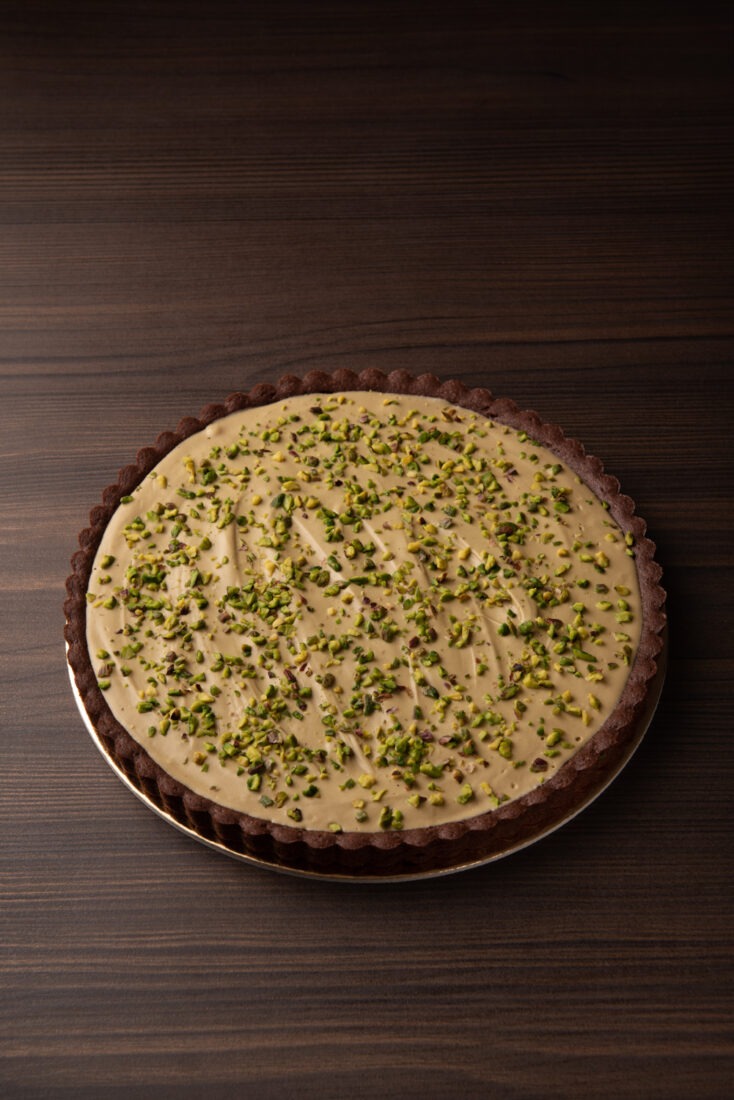
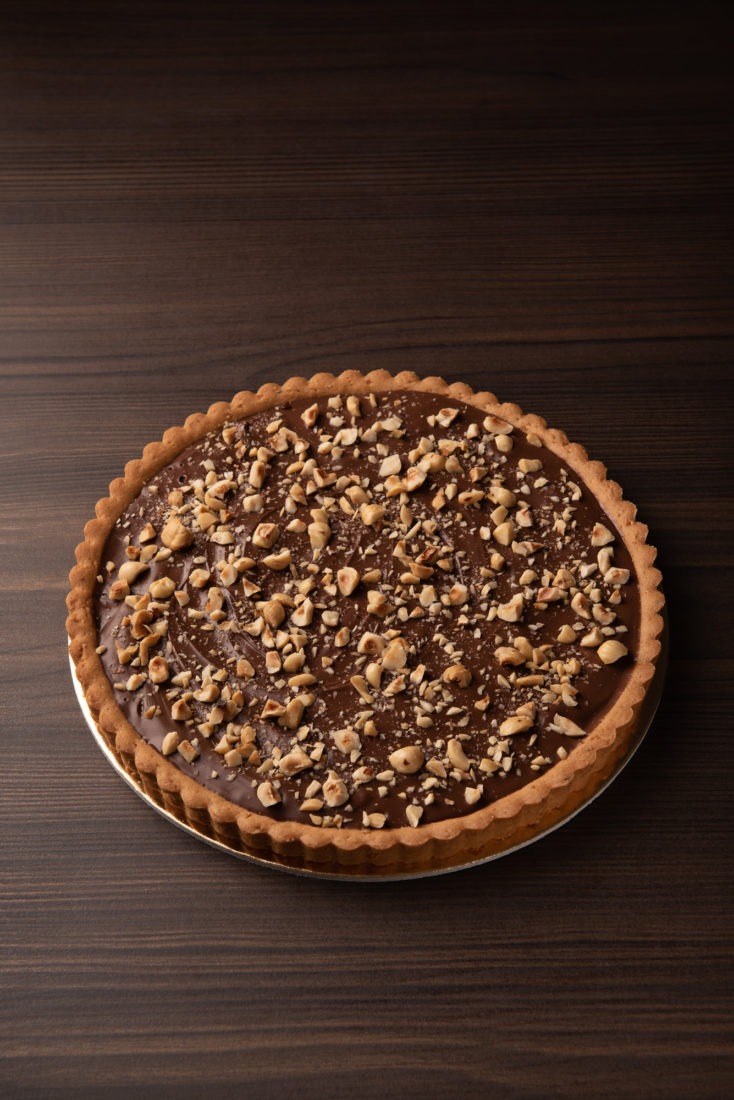
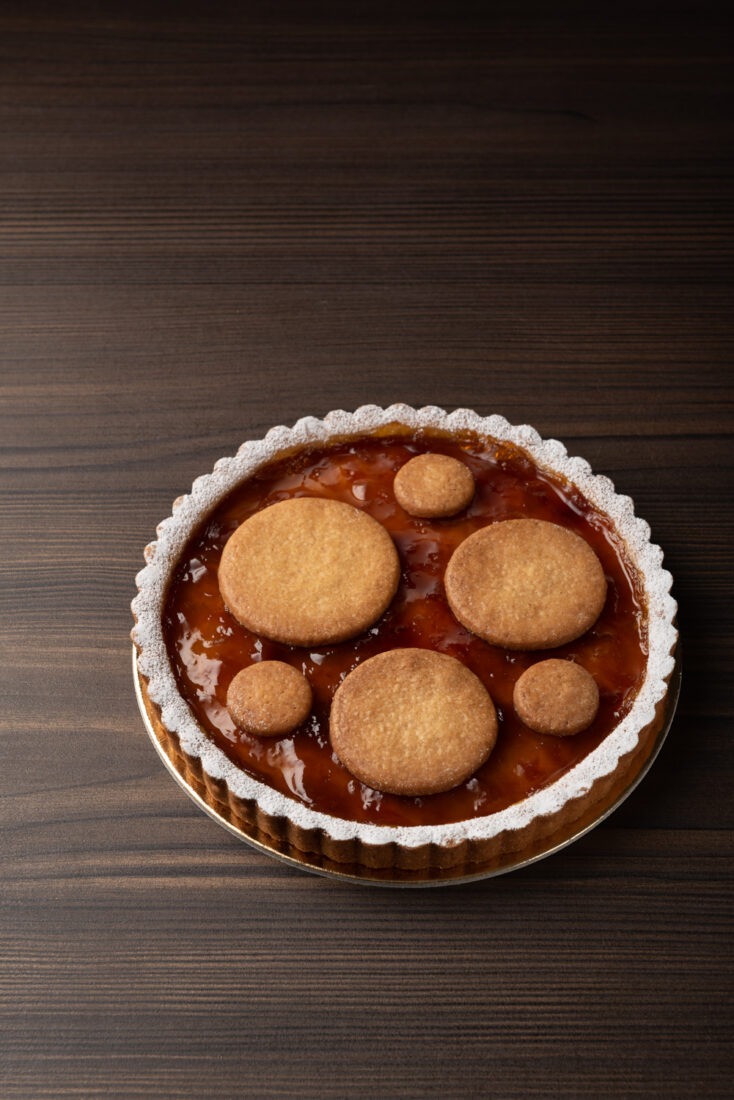
This second phase, commonly known as post-production, is a vital part of any professional still-life photoshoot. While a meticulously designed set is an essential starting point, studio flash lighting often highlights details that would go unnoticed under natural light. In a final photograph, however, these details instantly draw the eye: stray crumbs dropped while positioning the tart, minor jam smudges, or natural imperfections in the pastry crust. All of these elements must be carefully edited out of the final file to present the product in its absolute best and most appetizing light.
Food styling: the cookies
Once the tarts were finished, it was time to move on to the cookies. We decided to keep the same background surface and a consistent lighting style to ensure visual cohesion across both product lines. For the cookies, however, the challenge was to create distinct compositions that shared a similar layout but featured subtle variations.
We achieved a look we loved by playing with a stacked pile of cookies (placed either in the foreground or background) contrasted against a small group of two or three. To add movement and texture to the composition, we introduced a simple white napkin, which highlighted the cookies and created a beautiful contrast against the dark wooden surface.
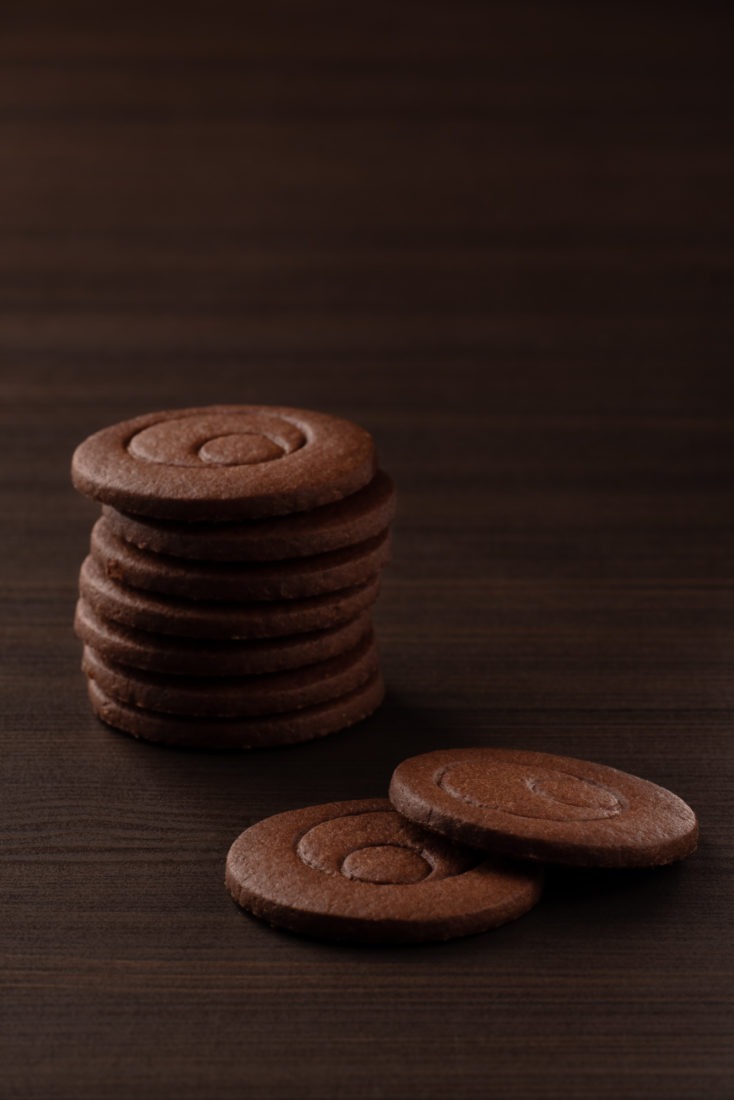
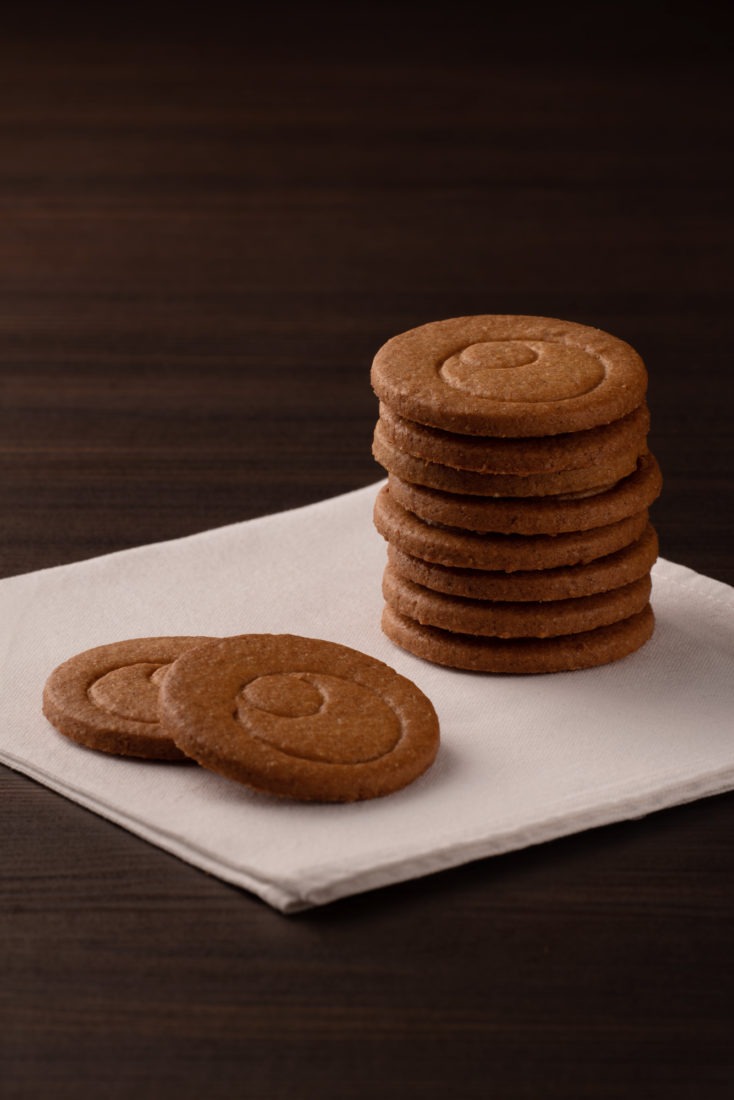

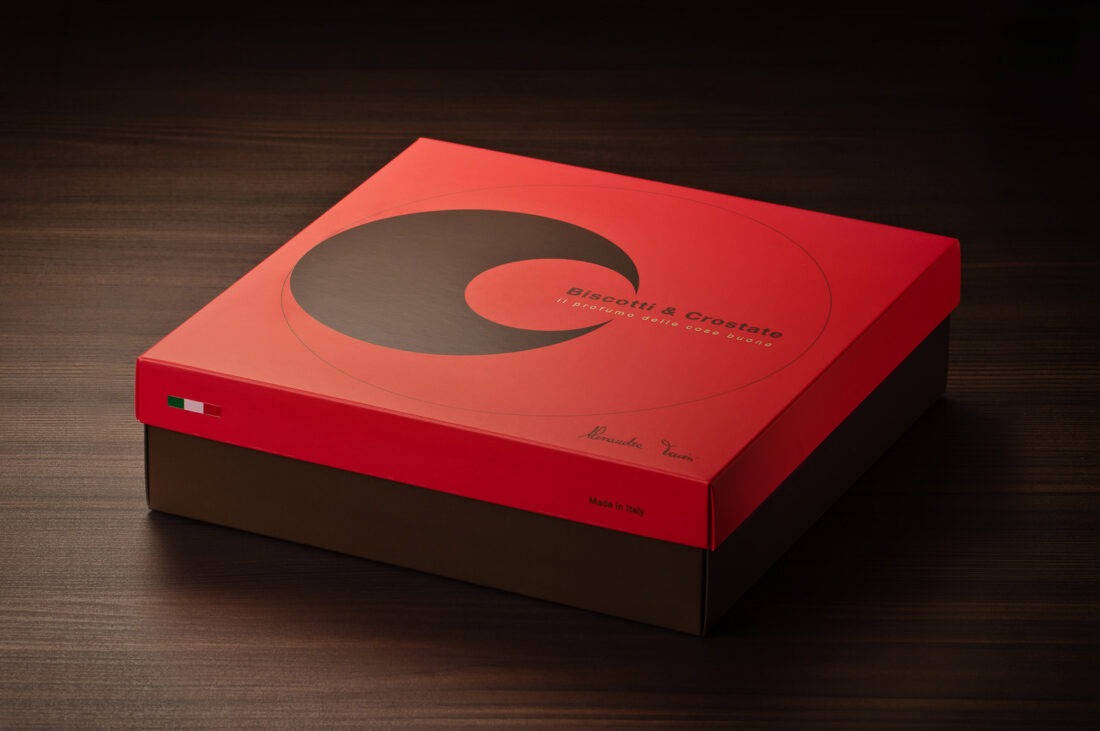
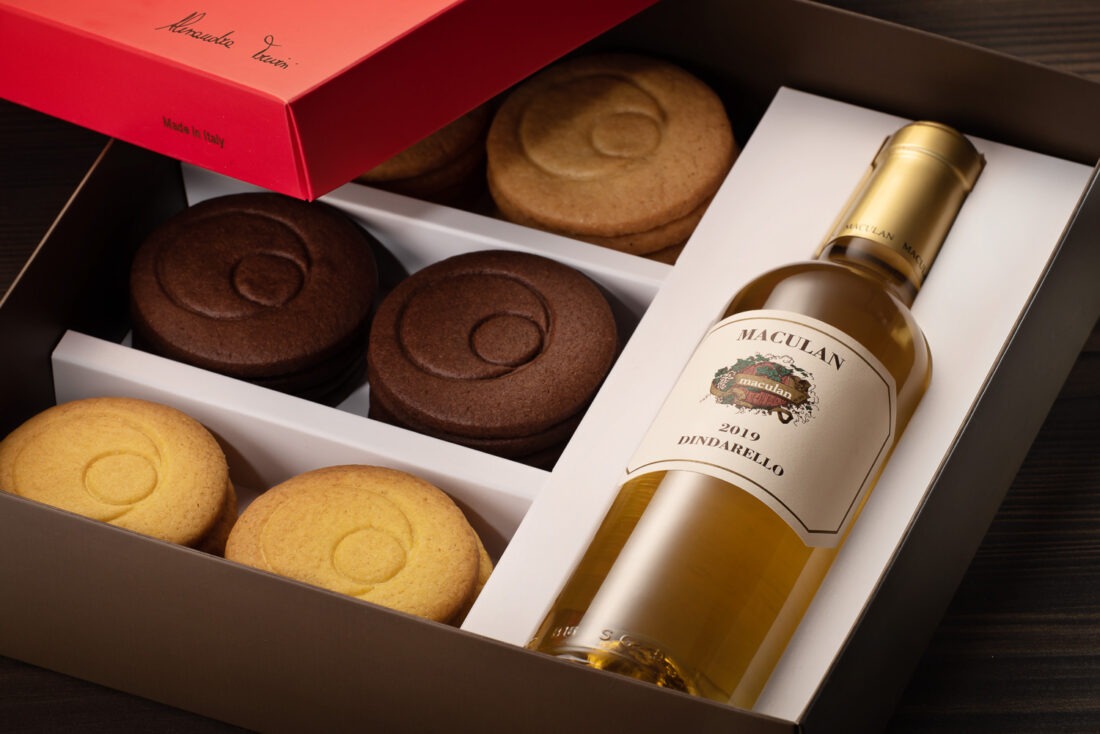
We wrapped up the project by shooting the boxes (both closed) to showcase the packaging design, and open, to display the delicious contents inside. With the e-commerce still-life session officially completed, the selected and organized files were ready to move on to the second phase: post-production.

If you like our work and would like to partner with us for your project’s still-life photography, feel free to reach out for a quote using our contact form.